Mastering AI-Assisted Development: Techniques for Writing High-Quality Code with AI Agents
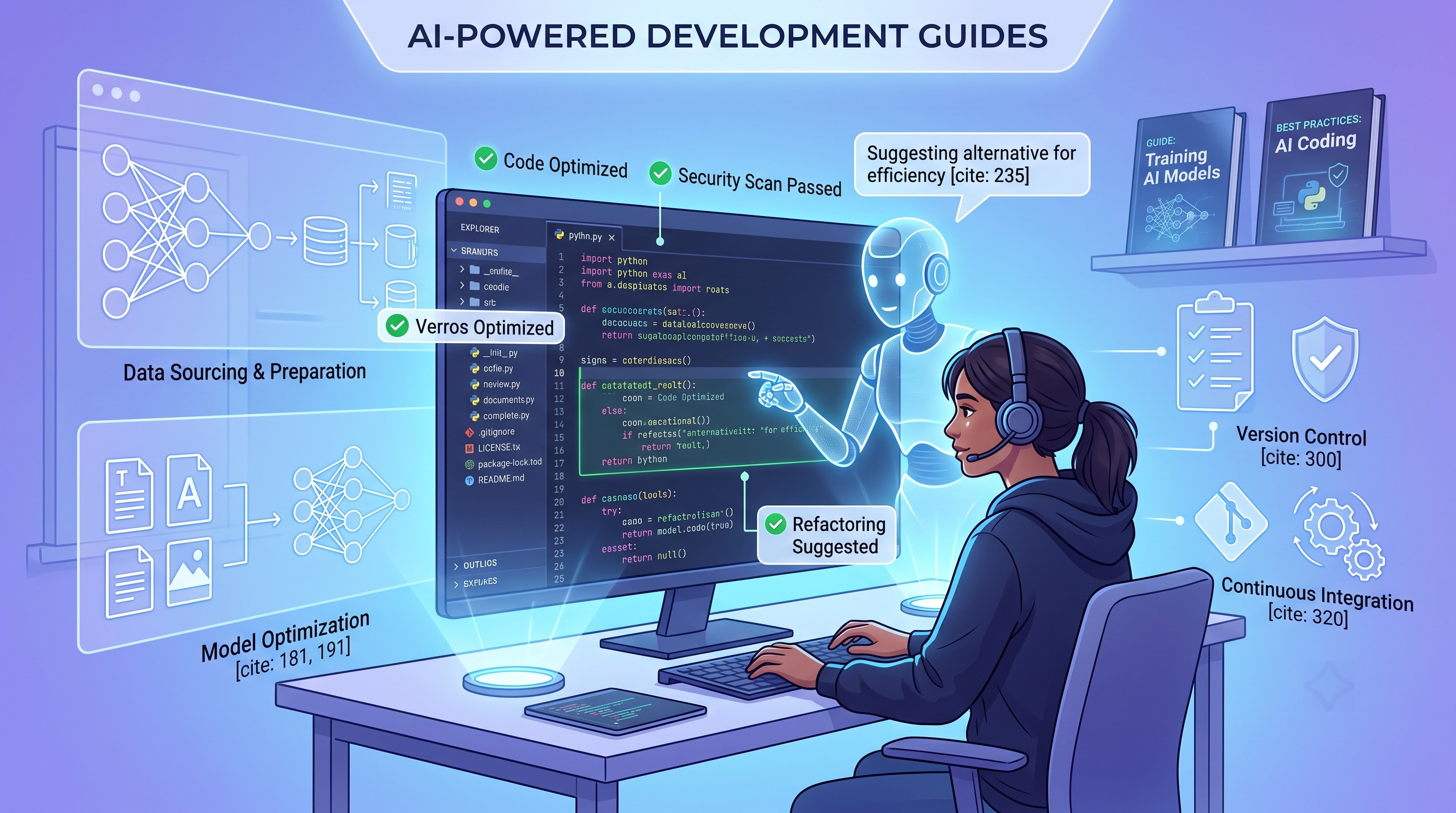
The software development landscape has undergone a seismic shift in recent years. Not too long ago, writing code was a purely manual endeavor, requiring developers to memorize syntax, scour documentation, and spend hours debugging missing semicolons or misaligned brackets. Today, artificial intelligence has fundamentally altered that reality. AI coding agents—ranging from GitHub Copilot and Cursor to advanced models like Gemini and Claude—have transformed from experimental novelties into indispensable pair programmers.
However, as any developer who has spent time working with these tools will tell you, generating code is easy; generating high-quality, secure, and maintainable code is an entirely different challenge. AI agents are incredibly powerful, but they are also eager to please. If you give them a vague instruction, they will confidently produce a flawed, inefficient, or insecure solution.
To truly harness the power of AI in software development, you must shift your mindset from merely writing code to actively guiding, orchestrating, and reviewing it. In this comprehensive guide, we will explore advanced techniques and best practices for writing high-quality code with AI agents, ensuring that your AI-assisted workflow leads to robust, enterprise-grade applications rather than unmanageable technical debt.
1. The Paradigm Shift: From Coder to Architect
Before diving into specific prompting techniques, it is crucial to understand how AI changes the developer's role. When you use an AI agent, you are no longer the primary typist. Instead, you step into the shoes of a Systems Architect and a Senior Code Reviewer.
Your AI agent acts as an incredibly fast, highly knowledgeable, but sometimes naive junior developer. It knows the syntax of virtually every programming language ever created, but it lacks the overarching business context of your specific application. It does not instinctively know your company's coding standards, your preferred architecture, or the subtle edge cases of your user base.
Therefore, your primary value is no longer in remembering the exact parameters of a specific library function. Your value lies in:
- Defining clear, unambiguous system architectures.
- Understanding the business logic and user requirements.
- Enforcing security protocols and performance constraints.
- Critically evaluating the output provided by the AI.
Embracing this mindset is the foundational technique for successful AI-assisted development. You must manage the AI agent with the same clarity and rigor you would use when directing a human team member.
2. Context is King: Advanced Prompt Engineering for Code
The quality of the code an AI agent produces is directly proportional to the quality of the context and instructions it receives. This is often referred to as "prompt engineering," but in the context of software development, it is more akin to writing a highly detailed technical specification.
The Problem with Vague Prompts
A common mistake developers make is treating the AI like a mind reader.
- Bad Prompt: "Write a user authentication function."
If you submit this prompt, the AI has to make dozens of assumptions. What language? What framework? Are you using JSON Web Tokens (JWT) or session cookies? How are passwords hashed? The resulting code will likely be generic and completely unsuited for your specific stack.
The "Constraint-Driven" Prompting Technique
Instead, use constraint-driven prompting. Tell the AI exactly what boundaries it must operate within.
- Good Prompt: "Write a
user login function in TypeScript for an Express.js backend. The function should accept an email and
password. Use
bcryptfor password hashing and verification. If successful, generate a JWT with a 1-hour expiration. Handle errors gracefully by returning appropriate HTTP status codes (e.g., 401 for invalid credentials, 500 for server errors). Ensure the code is strictly typed and follows ESLint standard conventions."
By front-loading the prompt with specific technologies, architectural patterns, and error-handling requirements, you drastically reduce the AI's room for error. You are steering it toward high-quality output on the very first iteration.
3. Iterative Generation: The Modular Approach
One of the quickest ways to end up with spaghetti code when using AI agents is to ask for a massive, monolithic feature all at once. If you ask an AI to "build a complete e-commerce checkout system," it will struggle to maintain context, likely hallucinate variables, and produce a tangled mess of logic.
High-quality AI coding relies on Iterative Generation. You should build software with AI exactly how you would build it manually: piece by piece, module by module.
Step-by-Step Execution
- Define the Interfaces
First: Start by asking the AI to define the data models, interfaces, or types. For example,
"Generate the TypeScript interfaces for a ShoppingCart and a CartItem." Review these interfaces. Once they
are correct, the AI has a solid foundation for the next steps.
Generate Helper Functions: Ask the AI to write small, pure functions that handle specific logic (e.g., "Write a function that calculates the total tax for the ShoppingCart interface we just created, assuming a flat 8% rate").
Assemble the Logic: Finally, ask the AI to bring these tested, isolated components together into the main controller or service layer.
By breaking the problem down into smaller, digestible chunks, you ensure that the AI's context window remains focused on the immediate task, resulting in cleaner, more modular, and highly cohesive code.
4. Test-Driven Development (TDD) as an AI Safety Net
If there is one methodology that pairs perfectly with AI agents, it is Test-Driven Development (TDD). Because AI can occasionally generate code that looks plausible but is logically flawed (often called "hallucinations"), having a robust suite of automated tests is non-negotiable.
Reversing the Workflow
You can approach TDD with AI in two highly effective ways:
Method A: You Write the Tests, AI Writes the Code Write a comprehensive unit test outlining the expected behavior, edge cases, and failure modes of the function you need. Then, provide the test to the AI and say: "Write the implementation code required to make this test suite pass." This heavily constrains the AI and forces it to write code that adheres strictly to your logic.
Method B: AI Writes the Tests, You Review, AI Writes the Code If writing tests is slowing you down, have the AI do the heavy lifting.
- Prompt: "I need a utility function that parses a CSV file and converts it into an array of JSON objects. Before writing the function, write a suite of Jest unit tests that cover standard inputs, empty files, malformed CSV rows, and missing headers." Once the AI generates the tests, review them to ensure they cover your business requirements. Once approved, instruct the AI to write the code to satisfy its own tests.
TDD ensures that the code generated by the AI is objectively verifiable, drastically elevating the overall quality and reliability of your codebase.
5. Enforcing Architectural Patterns and Best Practices
AI agents are trained on billions of lines of code from public repositories. While this makes them versatile, it also means they have learned both good and bad habits. If left unchecked, an AI might write a deeply nested, procedurally structured block of code simply because that pattern was statistically common in its training data.
To write high-quality code, you must explicitly demand best practices in your prompts.
Referencing Design Patterns
Don't be afraid to use high-level software engineering terminology. AI models understand these concepts well.
- Prompting for Clean Code:
"Refactor this class to adhere strictly to the Single Responsibility Principle (SRP)."
- Prompting for Patterns:
"Implement the data access layer for this feature using the Repository Pattern. Ensure the database logic is
decoupled from the business logic."
- Prompting for Performance: "Optimize this sorting algorithm for large datasets. Avoid nested loops where possible to reduce time complexity from O(n^2) to O(n log n)."
By explicitly requesting specific architectural patterns, you force the AI to elevate its output from "code that works" to "code that scales."
6. Navigating the Pitfalls: Security, Debt, and Hallucinations
Relying entirely on AI without a critical eye is a recipe for disaster. Writing high-quality code with AI requires a deep awareness of the technology's limitations.
The Threat of Insecure Code
AI models can, and do, suggest insecure code. They might hardcode API keys, fail to sanitize user inputs, or use outdated cryptographic libraries. You must treat all AI-generated code as untrusted input.
- The Mitigation: Always run static application security testing (SAST) tools on AI-generated code. Furthermore, actively use the AI as a security auditor. After it generates a function, send a follow-up prompt: "Identify any potential security vulnerabilities in the code you just wrote, specifically looking for SQL injection or Cross-Site Scripting (XSS) risks." Often, the AI will catch its own mistakes when prompted to look for them.
Managing "AI Sludge" and Technical Debt
Because AI can generate hundreds of lines of code in seconds, it is very easy to bloat your application with unnecessary code—often referred to as "AI sludge." The AI might include redundant utility functions or overly verbose logic.
- The Mitigation: Ruthless
refactoring. Once the AI provides a working solution, ask it to condense the code. "This code works, but it is too verbose. Refactor it
to be more concise and readable without losing any functionality or error handling." ### Handling
Hallucinated Dependencies
Occasionally, an AI will invent a library, package, or function that does not exist, simply because the name
sounds mathematically probable.
- The Mitigation: Always
verify package imports before running
npm installorpip install. If the AI suggests a library you are unfamiliar with, look it up in the official registries (like npm or PyPI) to ensure it is legitimate, actively maintained, and safe to use.
7. Context-Aware AI Tools: The Future of Codebases
The most significant leap in AI coding techniques involves moving beyond isolated, single-file chat windows and utilizing context-aware agents. Modern IDEs integrated with AI (like Cursor, or extensions leveraging advanced LLM APIs) can index your entire repository.
Strategic Context Injection
To get the highest quality code, you must leverage this codebase awareness. Instead of just asking for a new feature, point the AI to your existing standards:
- "Create a new API route for
updating user profiles. Use the validation patterns found in
src/middleware/validator.tsand ensure the database interaction matches the style used insrc/services/billingService.ts."
By grounding the AI in your existing codebase, the generated code will look and feel like it was written by a core team member, maintaining stylistic consistency and reusing existing internal utilities rather than reinventing the wheel.
8. Utilizing AI for Comprehensive Documentation
High-quality code is not just about logic; it is also about maintainability and readability. One of the most tedious tasks for developers is writing documentation, which makes it the perfect task to offload to an AI agent.
Self-Documenting Code Workflows
You can dramatically improve the quality of your project by integrating AI-driven documentation into your daily workflow.
- Inline Comments:
Highlight complex algorithmic logic and ask the AI, "Add concise inline comments explaining the time
complexity and logic of this specific loop."
- Docstrings and JSDoc:
Before committing code, feed your functions to the AI and prompt: "Generate comprehensive JSDoc comments for
this function, including descriptions of all parameters, return types, and potential thrown errors."
- README Generation: Give
the AI your project structure and configuration files, and ask it to generate a clean, formatted Markdown
README.mdfile that explains how to set up, run, and test the project.
Well-documented code reduces the onboarding time for new developers and acts as a roadmap for your future self when returning to the codebase months later.
Conclusion
The integration of artificial intelligence into software development is not a passing trend; it is a fundamental evolution of the craft. However, the presence of an AI coding agent does not diminish the need for skilled developers. On the contrary, it amplifies the importance of deep architectural knowledge, rigorous testing, and strict security practices.
Writing high-quality code with AI is about mastering the art of orchestration. By writing detailed, constraint-driven prompts, embracing test-driven development, demanding strict adherence to design patterns, and maintaining a vigilant eye for security vulnerabilities, you can leverage AI to code faster and better than ever before. The developers who will thrive in the future are not those who let the AI do all the thinking, but those who learn to expertly pilot these powerful tools to build resilient, world-class software.